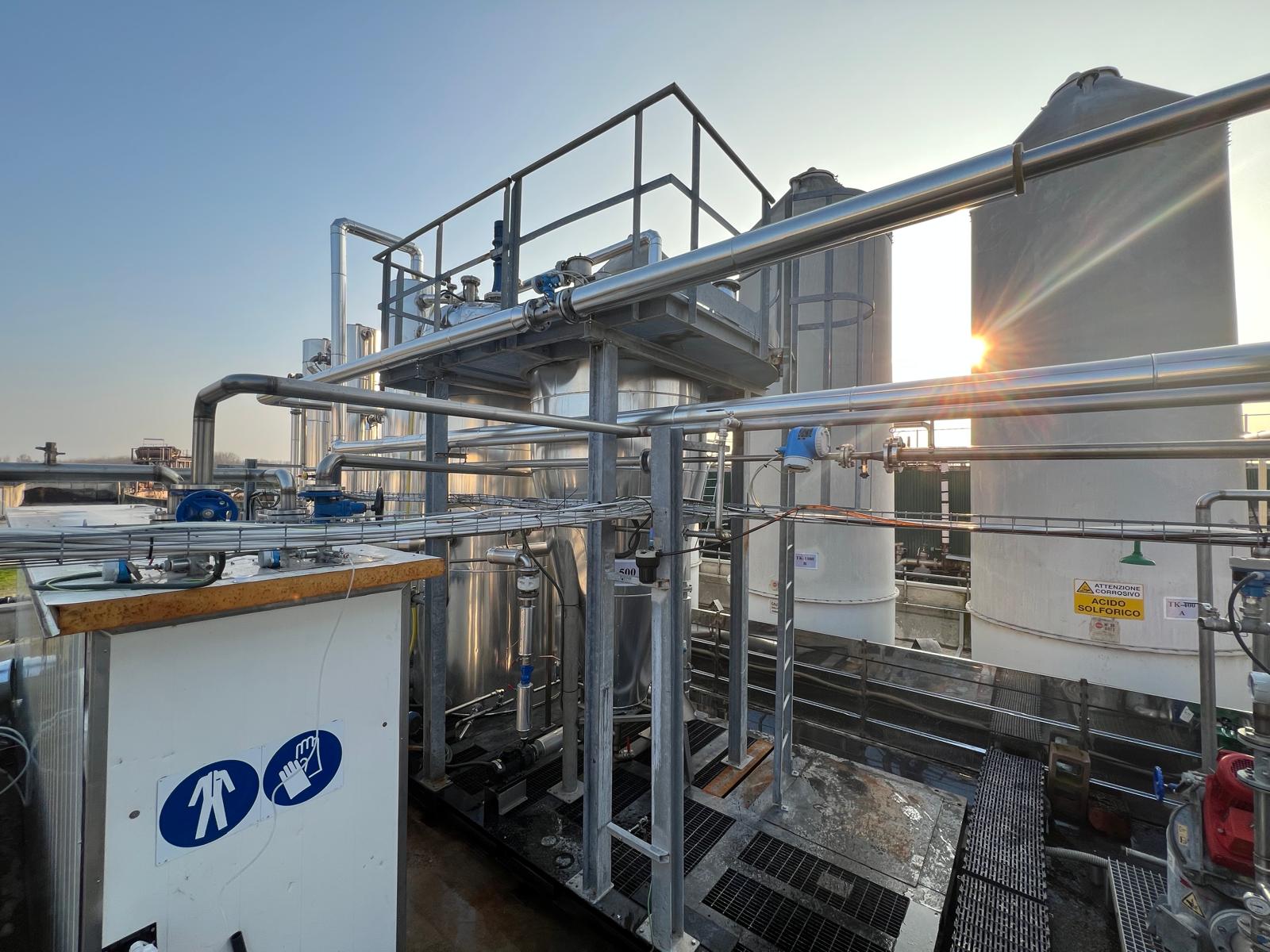

In an era characterized by the urgent need to reduce environmental impact and accelerate the energy transition, Ingenia steps in with a highly innovative and sustainable solution.
The growing focus on air quality and responsible resource management has led Ingenia, a company based in Senigallia (AN) in the Marche region and part of the ASAC S.r.l. group, to develop and test cutting-edge solutions for transforming organic waste and agricultural by-products into pure biomethane, a renewable fuel that represents a real alternative to fossil fuels.
Ingenia technology
is based on anaerobic digestion, a biological process that uses specific bacteria in the absence of oxygen to break down organic waste and generate biogas.
Thanks to Ingenia's proprietary patents, it guarantees the production of biomethane with zero CO₂ emissions, eliminating any impact on air quality and ensuring the highest possible performance in terms of sustainability, energy savings, and carbon footprint reduction.
Unlike all other systems currently on the market, in the patented Ingenia process, CO₂ is not separated from biogas and then left in gaseous form to be released into the atmosphere. Instead, it is literally captured and converted into bicarbonate, allowing for a system without any emission chimneys.
Facilities and Testing
Ingenia begins testing at a pilot plant located at the Sant'Angelo landfill in Senigallia (AN), with a capacity of 4 tons per day.
To date, testing continues on an industrial-scale plant with a capacity of approximately 35/40 tons per day located in the Mantua area, at the Sturla – Acquanegra sul Chiese (MN) farm.
Initial benefits for the Sturla Farm:
- Decrease in the amount of ammoniacal nitrogen in digestate, resulting in a reduction in the agricultural areas where digestate is spread as fertilizer.
- Sequestration of CO₂ in the biogas produced, resulting in an increase in the proportion of methane in the biogas sent to the cogenerator.
- Increased electrical yields and overall methane production thanks to improved anaerobic digestion.
ApplySystem applicability
The Ingenia system can be applied to any context, as it is suitable for large and small systems and adapts perfectly to any existing system.
One of the strengths of Ingenia technology is its ability to capture the CO₂ contained in biogas. This solution eliminates greenhouse gas emissions and allows for the treatment of a wide range of biomass, even those with high nitrogen content, such as FORSU, poultry manure, pig manure, and civil or industrial sludge, guaranteeing excellent results even with complex materials.
Benefits for the Environment and Economy
The biomethane produced by Ingenia represents a concrete solution for obtaining both environmental and economic benefits. First and foremost among these is the absence of CO₂ emissions and unpleasant odors in the atmosphere, making Ingenia technology suitable for all contexts, both agricultural and industrial, as well as offering a significant reduction in energy consumption.
Another advantage of Ingenia technology is the integration of thermo-alkaline hydrolysis of biomass entering the system, combined with a highly efficient ammonia stripping phase. This allows for the complete breakdown of organic matter and the removal of nitrogen from the biomass before it enters the anaerobic digestion phase. The result is greatly facilitated bacterial activity, with increased methane production and a significant reduction in the nitrogen present in the fermenter and in the digestate leaving the system.
More sustainable system
The system allows large quantities of nitrogen-rich agricultural waste by-products to be used in the feedstock for the anaerobic digester, making the activity much more sustainable in both economic and environmental terms. The plant has been tested by feeding it with either 100% chicken manure or 100% pig manure, with excellent results and significantly higher methane production compared to simple anaerobic digestion, thanks to the hydrolysis phase, which makes the organic matter much easier to digest.
Economic benefits
From an economic standpoint, Ingenia technology offers significant advantages, as it has extremely low energy consumption compared to other technologies in the field of biomethane. In addition, the costs of storing and spreading liquid digestate are reduced, requiring much smaller agricultural areas for spreading or allowing it to be disposed of in the sewer system, avoiding complex and expensive composting plants.
The Circular Economy in the Ingenia Model
Ingenia's philosophy fits perfectly into the current circular economy context. The goal is not only to produce renewable energy, but to create an integrated system in which every resource is valued. Biomethane is a perfect example of this vision: a product that comes from the reuse of waste and agricultural by-products, which in turn generates environmental and social benefits.
A key element is digestate, the liquid produced after anaerobic digestion, which is reused as a natural fertilizer. Thanks to Ingenia technology, digestate can have the desired nitrogen content, allowing for easy spreading limited to neighboring agricultural areas that are actually available to the farm, with extremely reduced transport and related environmental impacts.
Plants built using Ingenia technology are also simple, energy efficient, and easy to maintain. Throughout the entire process, the biogas does not need to be pressurized, avoiding costly and energy-intensive systems for preliminary purification and compression of the biogas.
Research and development, the new frontiers of sustainability
Ingenia's work does not stop there. A system is currently being patented that uses CO₂ sequestered in the form of bicarbonate to feed autotrophic microalgae cultivation, thus transforming CO₂ into valuable algae. These algae are used as a dietary supplement for livestock with high nutritional and immune value, or as biomass for other eco-sustainable applications, such as the production of bioplastics, natural fertilizers with specific soil regenerative properties, and more.
For further information or collaborations, visit www.ingeniarsi.it and contact us at info@ingeniasrl.biz.
Ingenia Editorial – Published by: Il Sole 24 Ore – January 31, 2025